
Why and How Kansas Public Health Could Be Key in Shaping a Statewide AI Roadmap
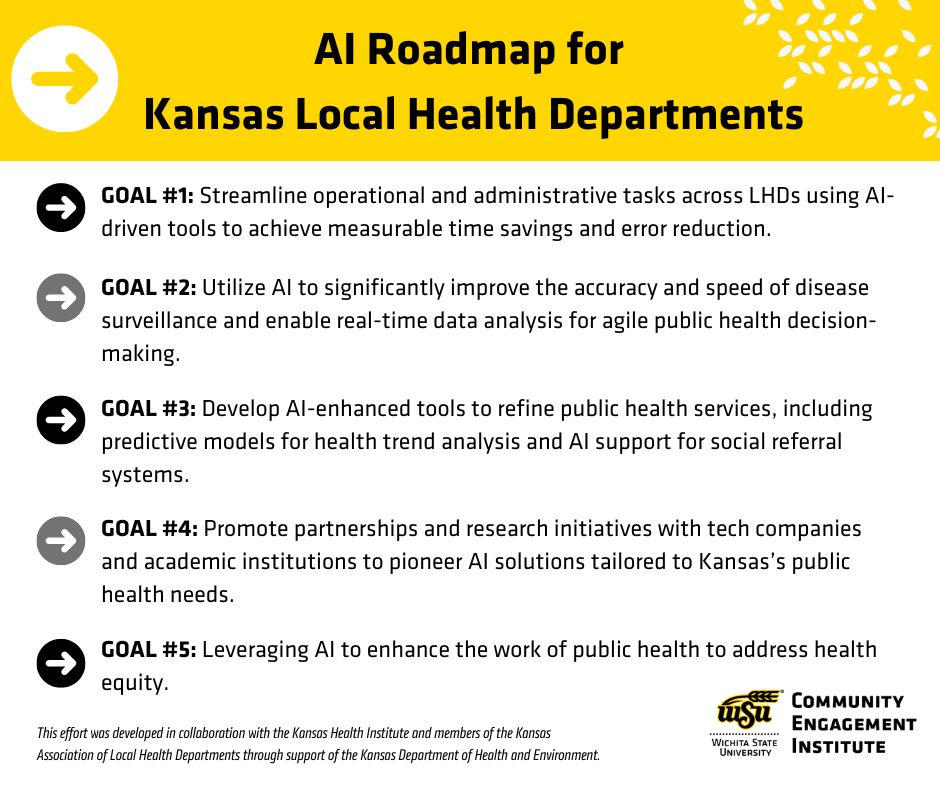
Artificial Intelligence (AI) has existed for many years, but it rapidly became a familiar term when OpenAI launched ChatGPT in 2022. This development sparked widespread interest in exploring the capabilities of generative AI (GenAI) and other forms of AI technologies. However, many organizations approach this exploration with caution or refrain from it altogether, often due to the absence of robust guidelines and policies. The development of guidelines has been gradual because organizations have been hesitant about how to proceed without readily available technical expertise and a comprehensive understanding of AI’s potential ethical, social and legal implications — both known and unknown. Other contributing factors include the evolving landscape of AI-related research, as well as federal and state regulations. Additionally, developing comprehensive AI guidance requires resources that may compete with other priorities.
Waiting for these issues to be fully resolved before acting may not be the optimal strategy, as inaction could lead to falling behind in leveraging AI’s potential, becoming reactive rather than proactive in managing potential risks and missing critical opportunities to integrate equity and ethical considerations into the AI landscape. As the field of artificial intelligence evolves, steps could be taken at various levels — from creating organizational guidance for AI use and safe experimentation to developing action plans or roadmaps at the state level. Effective guidance likely will require striking a balance, as overly high-level or restrictive approaches might hinder exploration and limit positive outcomes, while overly permissive guidance may fail to address ethical, social and legal considerations.
This blog focuses on the reasons why public health should be at the forefront of AI dialogue at all level, highlights several AI-related efforts in Kansas and provides ideas for next steps. To read more, click here.